

UX Design · Rapid Prototyping · Research
Disney Studio Technology
A Platform I Built Inside Disney That Got Greenlit
INTRO
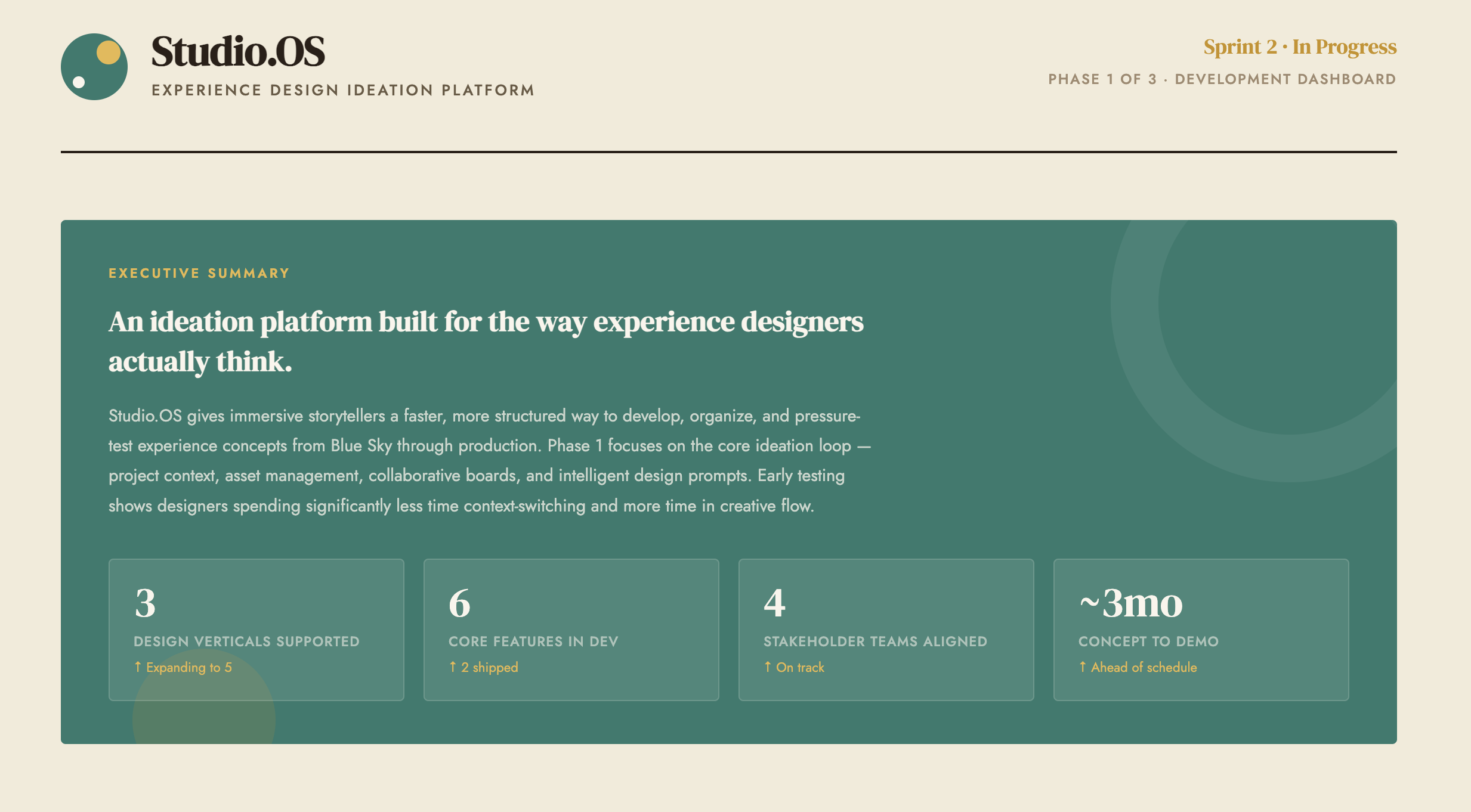
During my contract at Disney's Studio Technology team I identified a problem nobody had formally named yet — a gap in how writers across Disney's creative banners managed the earliest stages of their creative process. I didn't wait to be assigned a solution. I ran the research myself, built a working prototype, and presented it to studio leadership. The prototype got greenlit for engineering investment and company-wide development.
This project is covered under NDA. All visuals are directional wireframes that do not reflect Disney's internal assets or proprietary systems.
Some Stats
Self-initiated — identified the problem independently before it was a project
Accelerated — concept to working prototype in a matter of weeks
Greenlit — secured Studio Technology executive backing to develop and scale
Multi-vertical — mapped for expansion across Game Development, Imagineering, and TV Animation
What I did
·
What I did ·
My Process
-
Self-Initiated Research
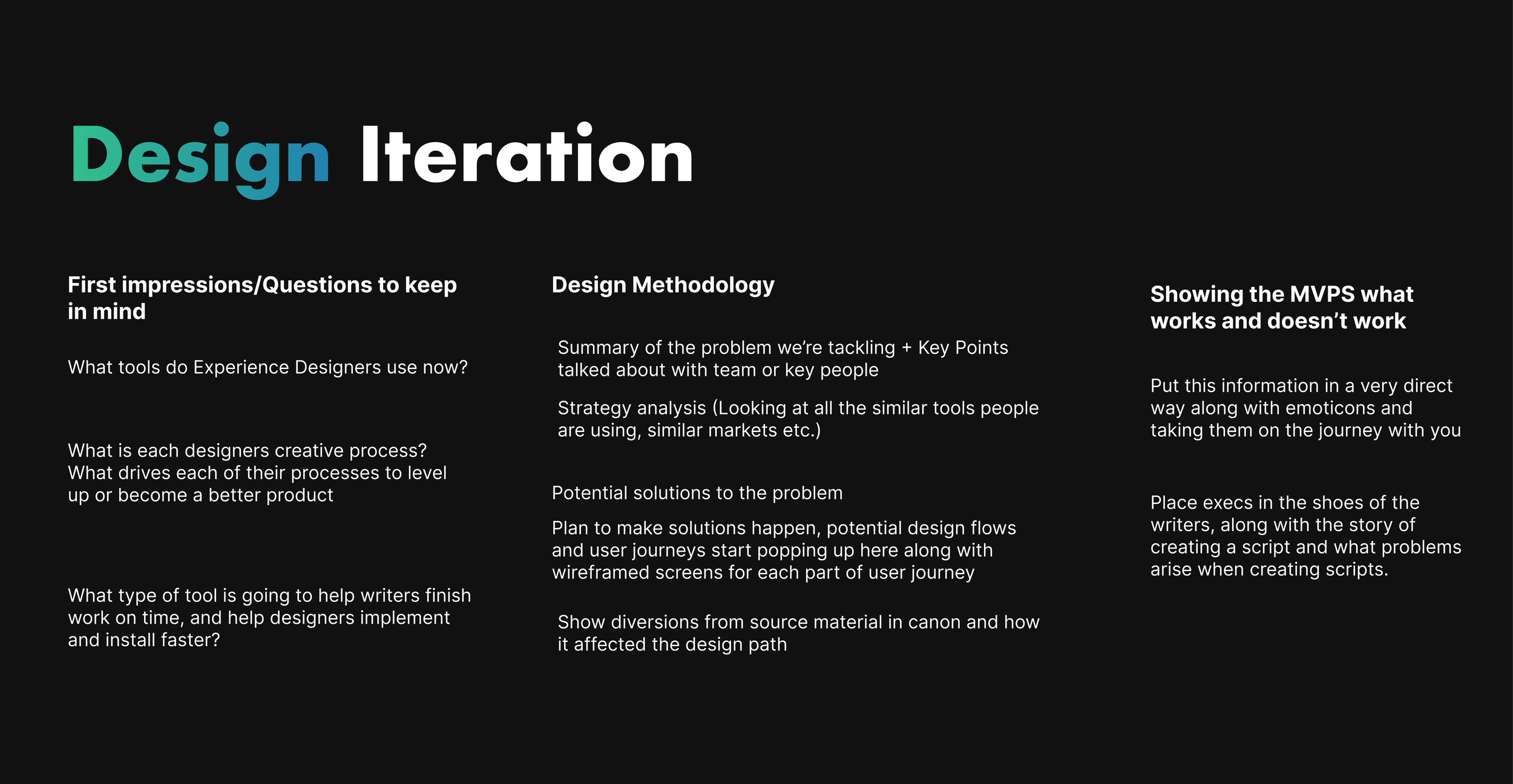
I didn't get assigned this problem — I found it. I sat with writers across Disney's creative banners and listened for where their process actually broke down, not where they thought it did. That distinction mattered. The friction point I identified wasn't obvious from the outside and hadn't been formally documented. I brought the research to the team with a clear point of view and a proposed solution before anyone asked for one.
-
Rapid Prototyping & UX Design
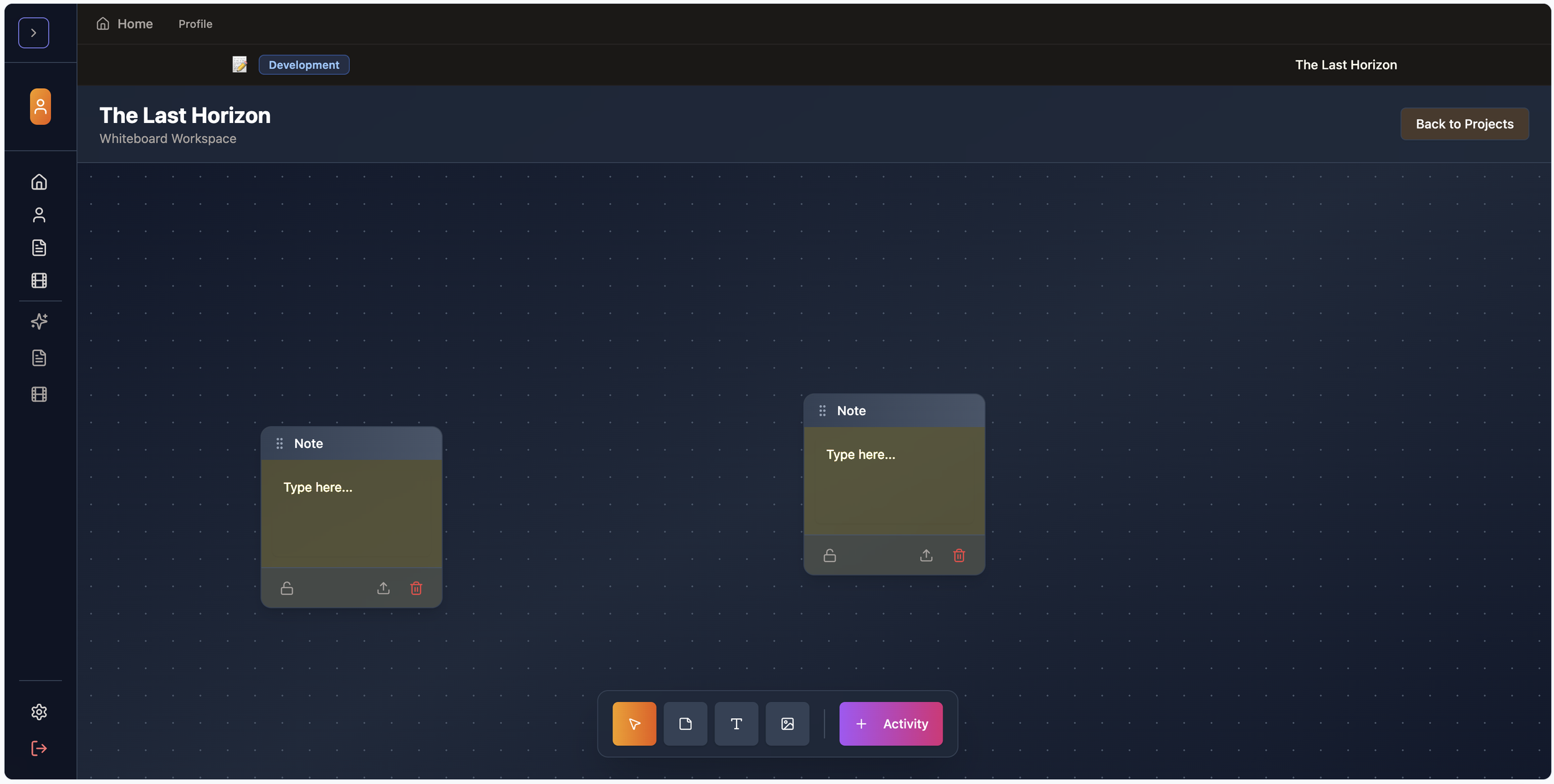
I built the platform myself using Cursor and Base44 — wireframes, user flows, and a fully interactive prototype — running rapid feedback loops with writers throughout. The goal was always to make something that felt built for a writer, not a developer. Every design decision ran through that filter. Concept to working product in weeks, not months.
-
Winning Executive Buy-In
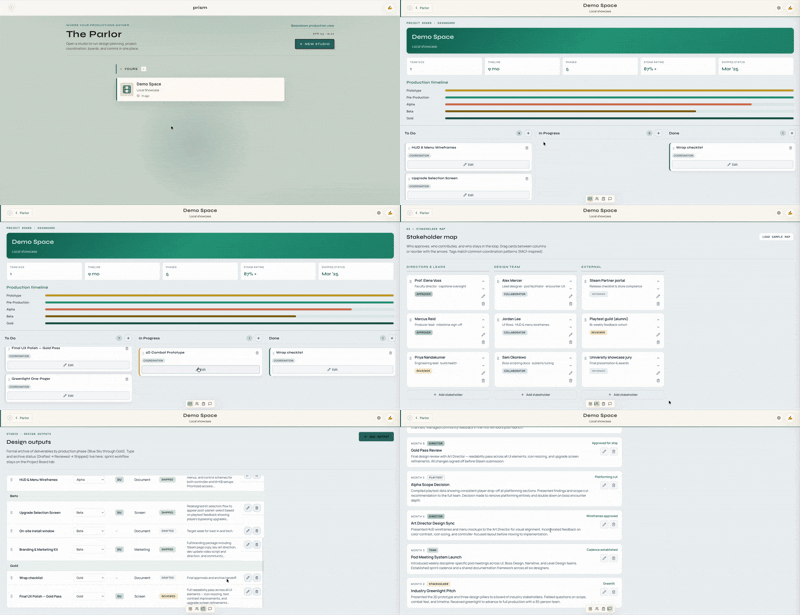
I presented a polished UX narrative alongside the live prototype to Studio Technology leadership. The demo secured organizational backing to develop and scale the platform — moving it from a personal initiative to a company-funded engineering project. That moment was the clearest proof that the research was right and the design was working.
REFLECTION